

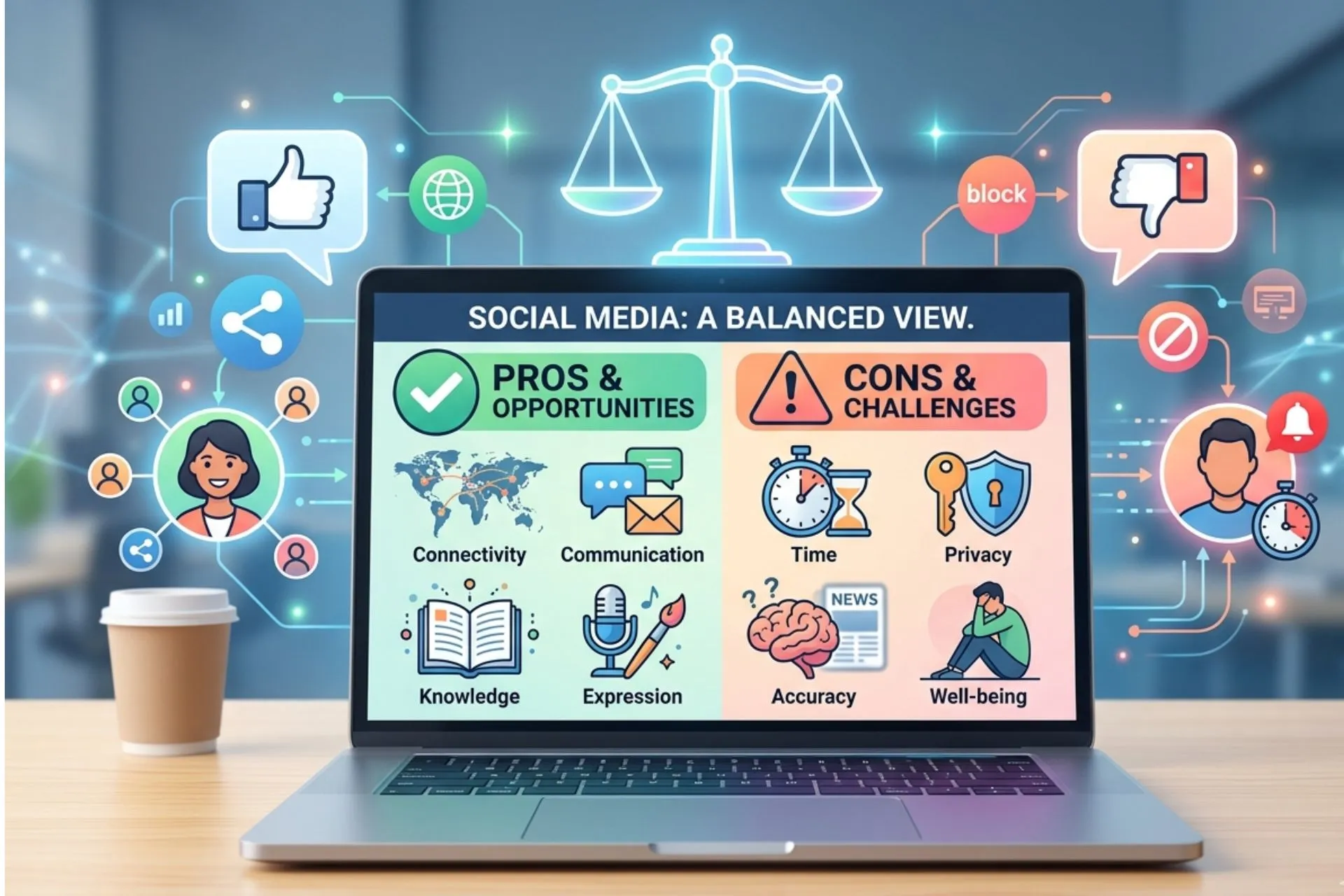
PROS AND CONS OF SOCIAL MEDIA
Social media platforms like Facebook, Instagram, LinkedIn, TikTok, and YouTube have become central to how people communicate, share ideas, and conduct business. For individuals, these platforms connect friends, family, and interest-based communities. For businesses, they provide marketing opportunities, audience engagement, and brand visibility. Understanding the pros and cons of social media is essential for both personal well-being and professional growth.
Key Advantages
of Social Media
COMMUNICATION AND CONNECTIVITY
Social media enables instant communication across continents. Tools like WhatsApp Business in London or New York help companies maintain client relationships efficiently. Families and friends can stay connected through messaging apps, video calls, and group chats.
MARKETING AND BUSINESS BENEFITS
Platforms such as LinkedIn and Instagram allow businesses to reach their target audiences effectively. GEO-aware targeting, like “social media marketing services near me” in Manchester or Los Angeles, helps companies connect locally. Costs vary: agencies in the UK may charge £500–£3,000/month, while in the USA, rates are typically $600–$3,500/month. Freelancers offer hourly services from £15–£50 in the UK and $20–$75 in the USA.
EDUCATIONAL AND INFORMATIONAL ACCESS
Social media provides quick access to tutorials, webinars, and communities for skill development. For example, students can follow YouTube or TikTok channels focused on coding, exam prep, or creative skills, offering an informal yet powerful learning experience.
COMMUNITY AND SUPPORT NETWORKS
From mental health groups to hobby forums, social media connects users with shared interests. Small businesses can also engage with niche communities to gain insights, build trust, and increase loyalty.
Potential Downsides
of Social Media
PRIVACY AND SECURITY RISKS
Personal data can be exposed through platform tracking, data breaches, or inadequate privacy settings. Regulations like GDPR in the UK/EU and CCPA in the USA aim to protect users but cannot eliminate all risks.
MENTAL HEALTH IMPLICATIONS
Overuse of social media has been linked to anxiety, depression, and addiction. Constant comparison with curated online personas can lower self-esteem, especially among teenagers.
MISINFORMATION AND FAKE NEWS
Viral content can spread false information rapidly, impacting elections, public health, and consumer behavior in cities like New York or London. Critical evaluation of sources is necessary to stay informed.
CYBERBULLYING AND HARASSMENT
Online harassment affects vulnerable groups disproportionately. Platforms offer reporting and moderation tools, but proactive monitoring and parental guidance are recommended for younger users.
How to Use Social
Media Safely
- Set Privacy Controls: Limit who can view your content.
- Verify Sources: Avoid sharing unverified information.
- Limit Usage: Aim for 1–2 hours daily to reduce addiction risk.
- Use Tools: Platforms like Hootsuite and Buffer help manage content safely and professionally.
- Monitor Minors: Ensure age-appropriate access and parental supervision.
Decision Framework
for Businesses
Before investing in social media:
- Identify Goals: Marketing, client engagement, or brand awareness.
- Assess Risks: Privacy, misinformation, and ROI.
- Choose Platforms Wisely: TikTok for younger audiences, LinkedIn for professional B2B connections.
- Evaluate Costs: Compare agency vs freelancer rates and local availability.
- Track Results: Use analytics to optimize strategy over time.
Top Tools
and Resources
- Management: Hootsuite, Buffer
- Analytics: Sprout Social, Google Analytics
- Privacy: DuckDuckGo, VPNs
- Learning: Coursera, LinkedIn Learning, Khan Academy
Conclusion
Social media is a powerful tool for communication, education, and business growth, but it comes with risks that require careful management. By understanding both the benefits and downsides, setting clear goals, using management tools, and observing privacy practices, individuals and businesses in the UK and USA can maximize advantages while minimizing negative impacts.
No Comments